Roles
BDSM roles explained: Dom, Domme, sub, switch and more
Dom, sub, switch, Domme, brat, Master, pet: what each role means, how they differ, and how to work out which one fits you.

Why roles matter in BDSM dating
A role is shorthand. When a profile says "Domme" or "submissive", it tells you in one word how that person likes to relate to power, and helps you see quickly whether you might fit together. But a role is only the start of the conversation. Two people who both call themselves submissive may want very different things, and that is why negotiation always comes next.
Roles are not tied to gender or sexual orientation. Women can be Dominant, men can be submissive, and people of any gender can switch. Use the words that feel right to you, and ask others what theirs mean.
Dominant (Dom, Domme, Dominatrix)
A Dominant enjoys taking control within limits agreed in advance. That might mean leading a scene, giving instructions, setting rules or deciding what happens next. "Dom" is the most common general term; many women use Domme, and Dominatrix is often used for a woman who dominates, sometimes professionally.
Good dominance is not about being harsh. It is about responsibility: reading your partner, respecting limits, checking in, and taking care of them afterwards. A Dominant who refuses to negotiate or ignores a safeword is not a Dominant; they are a risk.
Submissive (sub)
A submissive enjoys giving control to someone they trust. Submission can be playful, devotional, intense or quiet. Many subs describe the experience as freeing: for a while, someone else makes the decisions.
Submission is always a choice. The sub's limits frame the whole scene, and a sub can stop it at any moment with a safeword. Being submissive does not mean being passive in negotiation. The best subs are very clear about what they want and what they do not.
The lower-case "sub" is a stylistic habit in parts of the community, used alongside a capitalised "Dom". It is optional.
Switch
A switch enjoys both dominant and submissive roles. Some switch from partner to partner, some within one relationship, and some even within one scene. Switching is common and is not a sign that someone is undecided. It simply means both sides appeal.
Top and bottom
In BDSM, the top is the person doing the action, such as tying the rope or holding the paddle, and the bottom is the person receiving it. This is about activity, not power. A submissive usually bottoms, but someone can bottom to sensation while staying firmly in charge, and the phrase "topping from the bottom" describes a bottom who directs the scene.
Sadist and masochist
A sadist enjoys giving intense sensation and a masochist enjoys receiving it. Not every Dominant is a sadist, and not every submissive is a masochist; plenty of power exchange involves no pain at all. Sadomasochism (S&M) is about agreed sensation, carefully built up, between people who trust each other.
Common dynamics and sub-roles
Master/Mistress and slave
A deeper, usually long-term form of power exchange with agreed protocols that may extend into daily life. These dynamics are built slowly and often written down in a negotiated agreement, sometimes called a contract, which both people can revisit.
Daddy/Mommy and little (caregiver and little)
A nurturing dynamic in which one partner takes a caring, guiding role and the other enjoys a playful, younger-feeling headspace. It is a role-play between adults and has nothing to do with real minors.
Brat and brat tamer
A brat is a submissive who enjoys teasing and playful resistance; a brat tamer enjoys "taming" them. The resistance is part of an agreed game, so negotiation and a clear safeword are especially important.
Pet play: pup, kitten, pony and handler
One partner takes on animal-like behaviour and the other acts as owner, handler or trainer. It can be social and playful or structured and intense. Pony play often involves gear and training routines.
Rigger and rope bunny
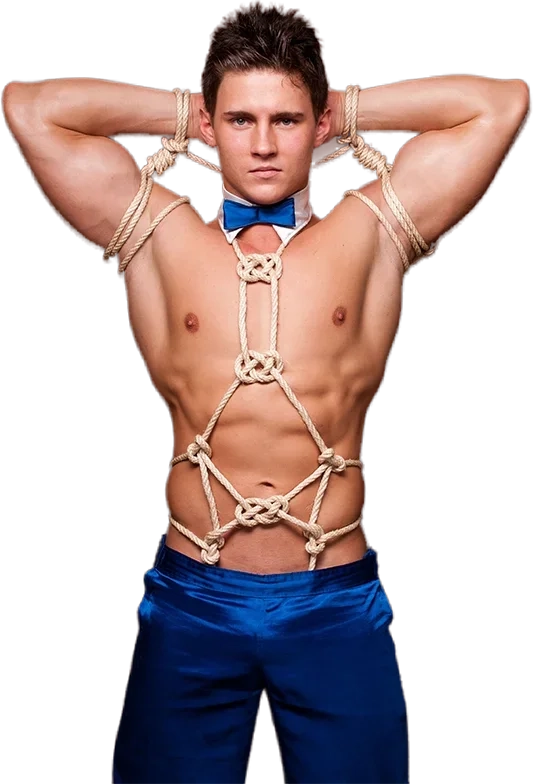
The rigger ties; the rope bunny (or rope bottom) is tied. Rope can be purely aesthetic, a form of restraint or part of a power dynamic.
Service submissive
A sub who finds fulfilment in being useful: tasks, rituals, looking after their Dominant. Service can be as meaningful as any physical play.
How to work out your own role
- Notice what you fantasise about. Are you the one giving instructions, or following them? Both? Neither yet?
- Make a yes / maybe / no list. List activities and dynamics and sort them honestly. Your "maybe" column is where exploration starts.
- Talk to people. Ask members how they found their role. Most will be happy to share.
- Try things slowly. A first scene can be very light. How it feels afterwards tells you a lot.
- Allow change. Roles often shift over time. Your profile can change with you.
Talking about roles with a new partner
Because the same word means different things to different people, ask rather than assume. "What does being a sub mean for you?" or "What does a good Dominant do, in your experience?" are great early questions. Listen for the details: how much structure they like, whether they want pain, power, service or play, whether the dynamic stays in the bedroom or extends into daily life, and what they need afterwards. Share your own answers too. Two people with different labels can be a great match, and two with the same label can be a poor one; the conversation tells you which.
Roles on BDSM Buddy
On BDSM Buddy you can say on your profile which role you identify with, what you are into and what you are looking for, from a play partner to a long-term dynamic. If you are still exploring, say so; curious members are welcome. Then read how negotiation and safewords work before your first conversation turns into a plan.
Meet people who share your kink
Create a free BDSM Buddy profile, say what you are into and start the conversation. Adults 18+ only.
Join freeFrequently asked questions
What is the difference between a Dom and a top?
A Dom holds the power in a dynamic; a top is the person doing the action in a scene. They often overlap, but not always: someone can top on request while their partner stays in control.
What is a Domme?
Domme is a term many women use for a female Dominant. Dominatrix is also used, sometimes specifically for a professional.
Can I be both Dominant and submissive?
Yes. People who enjoy both sides are called switches. Some switch with different partners, some within one relationship.
Do submissives have limits?
Always. A submissive's limits frame every scene, and any participant can stop play at any time with a safeword.